Flora Salazar
Ofrenda a la tormentaFlora Salazar is Amaia Salazar and Ros’s sister, and her story turns on two acts of taking charge that do not settle into a simple portrait of authority: she prepares to hold a funeral for their missing mother, then relinquishes her place in the family bakery to Ros. Between those decisions, her hidden visit to the bakery’s safe and her uneasy contest with Ros expose the strain beneath her commanding manner. Flora often speaks and acts as though she can set events in motion; the people closest to her can see how much that appearance costs.
Identity and Presence
Flora enters the family scenes as a forceful presence. When she appears, Amaia greets her with surprise, and Flora answers with a wry welcome that treats Amaia’s arrival like a rescue. Her manner is conspicuous, but it is not the whole story: in later scenes, Amaia reads the confidence as a public performance and notices the anxiety behind it. Flora is particularly unsettled when Ros does not respond as she expects.
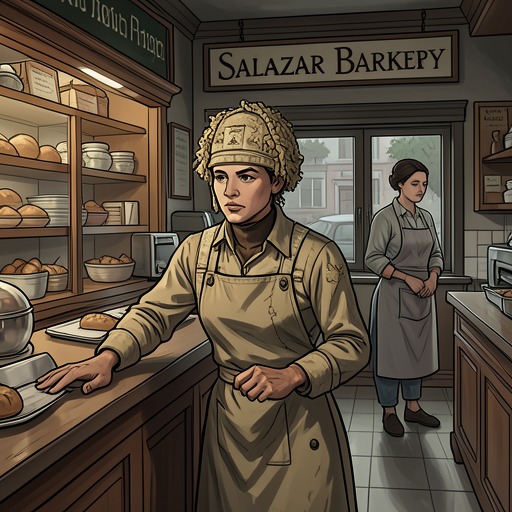
The family bakery, Salazar Bakery, is a central arena for that tension. It is more than a workplace in the sisters’ dispute: Ros has spent the past year making it the focus of her plans, and Amaia understands it as perhaps the first major success of Ros’s life. Flora’s position there therefore carries emotional weight beyond the question of who manages a business. Her actions affect both the ownership of the bakery and her sister’s sense of what she has built.
The Funeral Decision
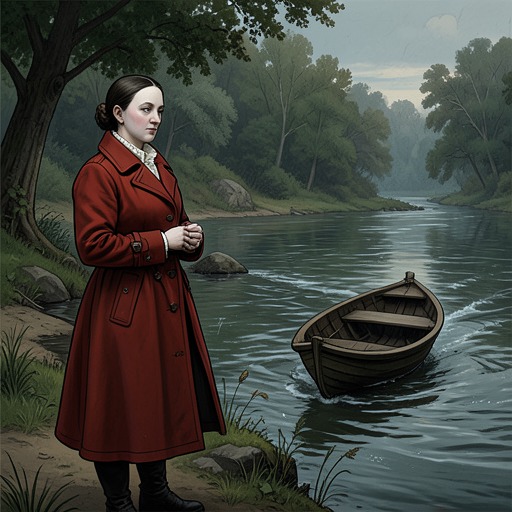
Flora arrives to say that she has come to prepare their mother’s funeral. Amaia is taken aback; the possibility has not occurred to her, because their mother is not officially dead and there remains a hope that she somehow survived the river. Flora does not deny that uncertainty. Instead, she argues that survival is improbable and that a funeral is appropriate even without official confirmation.
Her decision is not presented as an impulsive announcement unsupported by inquiry. Flora has spoken with the judge in Pamplona handling the case, who agrees that holding the funeral is pertinent. When Amaia asks whether Flora called him, she explains that he called her. The exchange establishes Flora as someone willing to act amid unresolved circumstances, while also showing how sharply her readiness differs from Amaia’s response. Amaia has not even considered a funeral; Flora has moved from uncertainty to preparation.
That contrast does not make the uncertainty disappear. The funeral remains a response to what is likely, not proof that their mother is officially dead. Flora’s choice gives the family a course of action without converting an unresolved disappearance into a confirmed fact. In this scene, her decisiveness is practical, but it also forces Amaia to confront a possibility she has not been ready to make concrete.
Authority and Resistance at the Bakery
When Amaia and Engrasi arrive at the bakery during a tense business meeting, Flora is surrounded by signs of impending change. Several unfamiliar cars are outside, along with her Mercedes. One suited visitor measures the premises and photographs the machinery and ovens; another sits with Flora and the administrator who has long kept the bakery’s accounts. Ros remains behind the office desk, silent and composed, while the workers watch with grave faces.
Flora presents herself as the person in command. Her voice is louder than necessary, her gestures assured, and her bearing suggests that she is the queen of the room. Yet Amaia recognizes this as a pose maintained for the people watching. Flora’s furtive glances toward Ros betray her nervousness. Ros’s stillness is what unsettles her: Flora is accustomed to provoking a response and making the world move according to her actions, but Ros does not give her the reaction she seems to expect.
The imbalance matters because the same standoff means different things to the sisters. For Flora, the contest appears to be another chance to demonstrate strength and control. For Ros, the bakery is the center of her life and a long-imagined project; Amaia and Engrasi fear that the struggle could seriously wound her. Engrasi has offered to help Ros, despite recognizing that she would not ordinarily intervene on equal terms between the sisters. The scene thus makes Flora’s apparent dominance uneasy: the more insistently she performs command, the more visible Ros’s refusal to yield becomes.
The Night Visit and the Safe
Flora’s connection to the bakery takes a more secretive form in her visit at two in the morning. In winter, she judges that encountering anyone on the streets of Elizondo at that hour is highly unlikely. She needs to act that night, she believes, so she can return the key before Ros notices it is missing. The entrance is dark; Flora has long asked the town council to install a streetlight, but the ground is privately owned and the council has resisted. She waits until she reaches the office before turning on the lights, taking care that they cannot readily be seen from outside.
There, she removes her shoes, climbs onto the sofa, shifts a painting by Ciga, and opens the safe with a code she created herself. The careful sequence makes clear that this is not an ordinary visit. But the safe is empty. Flora reaches inside and touches its metal bottom, still disbelieving what she has found, when Ros speaks behind her. Ros tells her that she has the contents. She also recalls an earlier occasion when Flora came in while she was away and left the painting slightly crooked; that clue led Ros to wonder what could be so important that Flora would enter like a thief in the night.
The discovery reverses the balance of the scene at the bakery. Flora has acted in secret and arrived expecting the safe to yield something, but Ros has noticed the earlier disturbance and secured its contents. Ros’s intervention is not loud or theatrical. It is the consequence of attention, patience, and a refusal to be moved by Flora’s performance of control. The empty safe makes their conflict tangible: behind the public dispute over the business lies something Flora has gone to considerable trouble to reach, and Ros has anticipated her.
The Transfer of the Business
Flora eventually announces that she will not return to managing the bakery. She says that doing so would take time away from other important projects she has in mind, as well as television. Since Ros has shown that she can run the family business well, Flora presents it as the best course for Ros to continue. She says that the paperwork will be arranged within days and that Ros will then be the sole owner of Salazar Bakery.
The announcement surprises Amaia, who raises her eyebrows; Ros confirms that Flora came to tell her the day before and that she, too, is astonished. The decision is therefore made before it is publicly declared, but it is not portrayed as something Ros had confidently expected. Flora frames the transfer as a considered choice based on her own competing commitments and Ros’s demonstrated ability. At the same time, the earlier struggle gives the announcement a context that prevents it from reading as a neutral administrative change. Flora has occupied the commanding position, Ros has resisted her without visibly yielding, and the ownership of the bakery is now to pass entirely to Ros.
Flora’s ending in these scenes is a withdrawal from the business rather than a return to its management. She speaks as the person making the decision, yet its consequence is to secure for Ros the enterprise that has become the center of her efforts. The contrast between Flora’s emphatic public bearing and the quiet finality of Ros’s new ownership defines her role: she can still set the terms in which a change is announced, but she cannot make Ros’s stake in the bakery disappear.